Sock Size Guide: A Comprehensive Overview (Updated 01/22/2026)
Navigating sock sizes can be tricky, as standards vary significantly between brands like Stance and Salomon. Accurate foot measurement, considering both shoe and weight/height, is key.
Why Sock Size Matters
Choosing the correct sock size is crucial for comfort, performance, and foot health. Ill-fitting socks can lead to blisters, chafing, and reduced circulation; Too-small socks constrict blood flow, causing discomfort and potentially impacting athletic performance. Conversely, overly large socks bunch up, creating friction points and diminishing the sock’s cushioning benefits.
Proper sock sizing ensures a snug, yet not constricting, fit that complements your footwear. Different sock types – athletic, compression, dress – require varying degrees of tightness. For example, compression socks rely on precise sizing to deliver the intended graduated compression.
Furthermore, brands like Stance offer specific size charts correlating to both UK and EU shoe sizes, highlighting the importance of referencing these guides. Ignoring sock size can negate the benefits of quality materials and construction, ultimately impacting your overall experience and foot wellbeing. A well-fitted sock enhances comfort and supports optimal foot function.
Understanding Standard Sock Sizes
Standard sock sizes aren’t universally consistent, creating potential confusion for consumers. Generally, sizes are categorized as Small, Medium, Large, and Extra Large, often linked to shoe size ranges. However, these ranges can differ significantly between manufacturers. A “Medium” in one brand might equate to a “Large” in another, necessitating careful attention to specific size charts.
UK sizes typically run from 4-7 and 7-11 for adults, while children’s sizes include ranges like 6-9 and 9-. EU sizes are commonly expressed numerically (35-37, 38-42, etc.), requiring conversion from US or UK shoe sizes. Stance, for instance, provides a chart linking UK and EU shoe sizes to their S, M, L, and XL sock sizes.
It’s vital to remember that these are guidelines. Factors like foot width and sock material (thickness) also influence the ideal fit. Always prioritize referencing the brand’s individual sizing information to ensure optimal comfort and performance.
US Sock Size Chart
While a definitive, universal US sock size chart is elusive due to brand variations, a general guideline exists. Small socks typically fit US men’s shoe sizes 1.5 ⏤ 4.5 and women’s sizes similarly. Medium socks generally accommodate men’s sizes 5.5 ⏤ 8 and women’s 6-9. Large socks usually suit men’s sizes 8.5 ⏤ 11.5, while Extra Large fits men’s 12.5 ⏤ 15.5.
However, these are approximate ranges. Stance, a popular sock brand, aligns with this general structure, but always recommends consulting their specific chart. It’s crucial to note that sock size isn’t solely determined by shoe size; foot width and desired compression level also play a role.
For compression socks, sizing becomes even more nuanced, factoring in calf circumference and height. Always prioritize the manufacturer’s chart for accurate sizing, as discrepancies can significantly impact comfort and effectiveness. Remember to measure accurately for the best fit!
UK Sock Size Chart
Determining the correct UK sock size requires understanding the correlation with UK shoe sizes. Generally, a small sock fits UK shoe sizes 4-7. This range is common for many brands offering simplified sizing options. A medium sock typically corresponds to UK shoe sizes 7-11, providing a broader fit for average adult feet.
However, like US sizing, UK sock sizes aren’t standardized. Brands like Stance offer a UK-specific chart, aligning small with sizes 4-7, medium with 7-11, and extending to larger sizes for men. It’s vital to consult the brand’s individual guide for precision.
When purchasing online, always double-check the size chart provided by the retailer. Consider foot width; a wider foot might necessitate a larger size. For children’s socks, specific UK size ranges (e.g., 6-9, 9-12) are available, differing from adult sizes. Accurate measurement is key to a comfortable fit!
European (EU) Sock Size Chart
The European (EU) sock size chart, like its UK and US counterparts, isn’t universally standardized. However, a general guideline exists. Small EU sock sizes typically align with shoe sizes 35-37, catering to smaller feet. Medium sizes generally correspond to shoe sizes 38-42, fitting a wider range of adults.
Larger EU sock sizes, such as 43-46, are designed for those with shoe sizes in that range, and sizes can extend up to 50 for larger feet. Brands like Stance provide specific EU size breakdowns alongside their UK and US charts, offering a convenient cross-reference.
When shopping for socks online, prioritize the brand’s specific EU size chart. Variations exist, and relying solely on a generic conversion can lead to an ill-fitting pair. Remember to consider foot width; a broader foot may require moving up a size. Accurate measurement ensures optimal comfort and performance.
Men’s Sock Size Guide
Determining the correct men’s sock size involves considering both shoe size and foot width. General ranges apply, but brand-specific charts are crucial for accuracy. Small sizes typically fit shoe sizes 1.5 ‒ 4.5 (EU 35-37), while medium accommodates sizes 5.5 ‒ 8 (EU 38-42).
Larger sizes, such as large (8.5 ⏤ 11) and extra-large (12.5 ⏤ 15.5, and beyond), cater to bigger feet. Stance, for example, offers a detailed men’s sock size chart aligning UK and EU shoe sizes with their S, M, L, and XL designations.
Beyond standard sizing, compression socks require consideration of weight and height for optimal performance. A snug, but not constricting, fit is essential. Always consult the manufacturer’s guide, as sizing can differ significantly. Prioritizing a proper fit enhances comfort, prevents blisters, and maximizes sock functionality.
Stance Men’s Sock Sizing
Stance offers a clearly defined men’s sock sizing system, correlating UK and EU shoe sizes to their Small, Medium, Large, and Extra Large options. Small socks are designed for UK shoe sizes 1.5 ⏤ 4.5, which translates to EU sizes 35-37. This size is ideal for smaller foot dimensions.
The Medium size comfortably fits UK shoe sizes 5.5 ‒ 8, corresponding to EU sizes 38-42. For those with larger feet, the Large size accommodates UK sizes 8.5 ‒ 11 (EU 43-46). Stance’s Extra Large option caters to UK sizes 12.5 ‒ 15.5, aligning with EU sizes 47-50.
An even larger XXL size is available for those with a UK size of 50 and a US size of 15.5. It’s crucial to consult Stance’s official size chart for the most accurate fit, as variations can occur. A well-fitted Stance sock enhances both comfort and performance.
General Men’s Sock Size Ranges
While Stance provides a specific chart, general men’s sock sizing typically follows shoe size ranges. Small socks generally fit men’s shoe sizes 6-8, offering a snug fit for smaller feet. Medium socks are commonly designed for shoe sizes 8-10, accommodating a broader range of foot sizes.
Large socks usually correspond to shoe sizes 10-12, providing ample room for larger feet. Extra-large socks are intended for shoe sizes 12 and above, ensuring a comfortable and non-restrictive fit. However, these ranges are approximate and can vary significantly between brands.
Considering waist size can also be helpful, particularly with compression socks or socks designed to stay in place. If a pant’s waist size differs from the standard (e.g., 105cm waist with a 102cm or 108cm pant), opting for a larger sock size is recommended. Always prioritize comfort and proper circulation when selecting sock size.
Women’s Sock Size Guide
Determining the correct women’s sock size often relies on correlating it with shoe size, though brand variations exist. Generally, women’s small socks fit shoe sizes 5-7, providing a comfortable and secure fit for smaller feet. Medium socks typically accommodate shoe sizes 7.5-9.5, offering a versatile option for many.
Large socks are usually designed for shoe sizes 10-11.5, ensuring adequate coverage and comfort for larger feet. Like men’s sizes, these are guidelines, and individual foot shapes and sock materials influence the best fit. When selecting compression socks, weight and height are crucial factors, alongside shoe size.
Pay attention to brand-specific charts, as Salomon and Stance, for example, may have unique sizing conventions. A well-fitting sock enhances comfort and performance, preventing blisters and promoting proper foot health. Prioritize a snug, yet not constricting, feel.
Children’s Sock Size Guide
Finding the right sock size for children is essential for comfort and proper foot development. Children’s sock sizes are typically linked to shoe size, but growth spurts necessitate frequent re-evaluation. Common children’s sizes include UK 6-9, UK 9-12, and UK 12-3, corresponding to varying shoe size ranges.
Infant socks (typically up to UK size 6) require a gentle, non-constricting fit to avoid hindering circulation. As children grow, ensure socks aren’t too tight, which can cause discomfort and impede foot health. Consider the sock’s purpose – thicker socks for colder weather or sports may require a slightly larger size.
Brand consistency isn’t always guaranteed, so checking specific size charts is advisable. Regularly inspect children’s socks for wear and tear, and replace them as needed. A properly fitted sock supports healthy foot development and prevents irritation during play and activity.
How to Measure Your Foot for Socks
Accurate foot measurement is crucial for selecting the correct sock size, especially given variations between brands. Begin by placing a piece of paper on a hard, flat surface. Stand with your heel against a wall and trace the outline of your foot carefully, ensuring the pen is held vertically. Repeat for the other foot, as sizes can differ.
Measure the length of the tracing from the heel to the tip of your longest toe in millimeters or inches. It’s best to measure at the end of the day when feet are slightly swollen. Consider the sock’s intended use; thicker socks or compression socks may require a slightly larger measurement.
Carol Feller emphasizes precise measurement for knitted socks, highlighting the importance of gauge information. Compare your measurement to a sock size chart, remembering that these are guidelines. Always prioritize comfort and avoid socks that are too tight or restrictive.
Converting Shoe Size to Sock Size
While not a perfect science, converting your shoe size can provide a starting point for determining your sock size. However, remember that sock sizing isn’t directly correlated and varies considerably between manufacturers like Stance and Salomon. A general guideline suggests using your shoe size as a reference, but always prioritize foot measurement for accuracy.
For example, a US men’s size 9 shoe might correspond to a sock size Medium (M), typically fitting shoe sizes 5.5 ‒ 8. Conversely, a size 11 shoe often aligns with a Large (L) sock, accommodating sizes 8.5 ⏤ 11.5. European (EU) sizes also play a role, with a size 42 shoe potentially needing a sock size L (43-46).
Always consult specific brand size charts, as discrepancies are common. Don’t solely rely on shoe size; consider foot length and intended sock use for the best fit. A one-size-fits-all approach rarely works!
Compression Sock Sizing: Weight & Height Considerations
Proper fit is crucial for compression socks to deliver their intended benefits. Unlike standard socks, compression levels require sizing based not only on foot size but also on your weight and height. Charts provided by manufacturers are essential, as compression strength diminishes with improper sizing.
Generally, compression sock sizing involves measuring your ankle circumference and calf circumference at their widest points. These measurements, combined with your height and weight, determine the appropriate size – Small, Medium, Large, or Extra Large.
For instance, a person of average height and weight might fit a Medium, while a taller or heavier individual may require a Large or XL. The document provides sizing charts for compression tights and shorts based on weight and height. Ignoring these factors can lead to ineffective compression or, conversely, discomfort and restricted circulation.
Brand-Specific Sock Size Charts (Salomon Example)
Sock sizing isn’t universal; significant variations exist between manufacturers. What constitutes a “Medium” in one brand might fit differently in another. Therefore, consulting brand-specific size charts is paramount for an optimal fit. Salomon, for example, offers detailed sizing guides online for both men’s and women’s running shoes and socks.
These guides often correlate shoe size (US, UK, EU) with corresponding sock sizes. RunRepeat provides access to Salomon’s sizing information, highlighting the importance of checking these resources. Stance also provides a size chart correlating UK and EU shoe sizes to their sock sizes (S, M, L, XL).
Always prioritize the manufacturer’s chart over generalized sizing guides. Discrepancies can arise due to differing materials, construction techniques, and intended sock use (e.g., running, hiking, casual wear). A precise fit ensures comfort and performance.
Knitting Sock Sizes: Carol Feller’s Tips
For those venturing into the world of hand-knitted socks, accurate foot measurement is even more crucial than with commercially produced socks. Carol Feller, a renowned sock designer, emphasizes precise measurements for a successful outcome. Her tips focus on obtaining accurate foot dimensions before beginning a project.
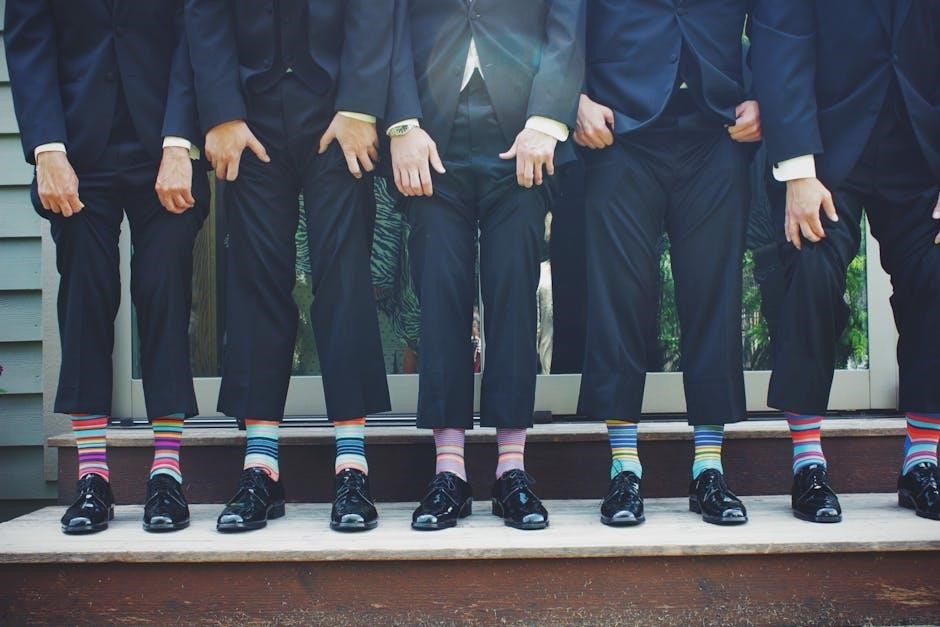
Feller’s guidance includes detailed instructions for measuring foot length and circumference, considering variations for different sock styles (e.g;, standard, shortie, long). She provides gauge information – stitches and rows per inch – essential for achieving the intended size. Her patterns include casting-on techniques, heel turn instructions, and finishing details.
Browsing Carol’s sock designs offers a wealth of knowledge for knitters. Understanding gauge and adapting patterns to individual foot shapes are key skills. Proper measurement prevents socks that are too tight, too loose, or simply ill-fitting, ensuring a comfortable and enjoyable wear.
Dealing with Size Variations Between Brands
One of the most frustrating aspects of sock shopping is the inconsistency in sizing between different manufacturers. What you consider a size ‘M’ in one brand might fit completely differently in another. This stems from varied standards and approaches to sock construction.
Reputable brands like Stance and Salomon, while offering size charts, can still present discrepancies. It’s crucial to consult each brand’s specific guide rather than relying on a universal size. Online resources like RunRepeat can offer comparative sizing information, but individual foot shape plays a role.
When in doubt, erring on the side of a slightly larger size is generally preferable to a sock that’s too constricting. Consider reading customer reviews for insights into a brand’s sizing tendencies. Ultimately, finding the perfect fit often involves some trial and error.
Waist Size and Sock Fit (Pants Correlation)
While seemingly unrelated, there’s a subtle correlation between waist size and optimal sock fit, particularly when considering how socks interact with pants. Individuals with larger waist sizes often have proportionally larger leg circumferences, potentially requiring socks with more stretch or a wider cuff.
If your waist measurement falls near the upper end of a pant’s size range – for example, a 105cm waist in pants sized at 102cm or 108cm – opting for a slightly larger sock size can prevent constriction and discomfort. This is especially relevant for compression socks or those with tighter elastic bands.
The goal is to ensure the sock doesn’t dig into the leg or create a noticeable gap when pants are worn. A comfortable sock fit complements overall garment fit, enhancing both comfort and appearance. Consider this connection when selecting socks alongside new trousers or jeans.
Troubleshooting Sock Size Issues (Too Tight/Loose)
Experiencing sock fit issues? Several factors could be at play. If socks feel too tight, restricting circulation or causing discomfort, it’s likely a sizing error – try a larger size, or a different brand known for more generous cuts. Consider the sock’s material; some fabrics offer less stretch than others.
Conversely, loose socks that slip down or bunch up indicate a size that’s too large. Look for socks with a snugger fit, potentially featuring a reinforced heel or elasticized cuff. Heel placement is crucial; a poorly positioned heel can contribute to looseness.
Remember brand variations are significant. What’s a ‘medium’ in one brand might be a ‘large’ in another. Don’t hesitate to consult specific brand size charts. If issues persist, re-measure your feet and compare to the chart. Prioritize comfort and proper fit to avoid blisters or discomfort.
Where to Find More Detailed Size Information
For in-depth sock sizing guidance, begin with the official websites of individual brands. Stance, for example, provides detailed charts correlating UK, EU, and US shoe sizes to their sock sizes. Salomon also offers comprehensive online size guides for both men’s and women’s socks and compression wear;
RunRepeat is a valuable resource, compiling size charts from numerous brands, including Salomon, offering comparative data. Retailer websites often feature size guides specific to the brands they carry. Don’t overlook community forums and review sections; user feedback can provide real-world insights into sizing accuracy.
Gentl.mn offers a general overview of sock sizing considerations. For knitted sock patterns, Carol Feller’s resources provide detailed instructions and measurement tips. Always prioritize brand-specific charts, as sizing conventions vary widely.